
Pakistan’s message for terrorism victims: More than 90,000 Pakistanis have lost their lives
Islamabad, August 21 (Hibya) - Pakistan’s Foreign Ministry issued a statement on the occasion of the August 21 International Day of Remembrance of and Tribute to the Victims of Terrorism, highlighting the heavy price the country has paid in the fight against terrorism.
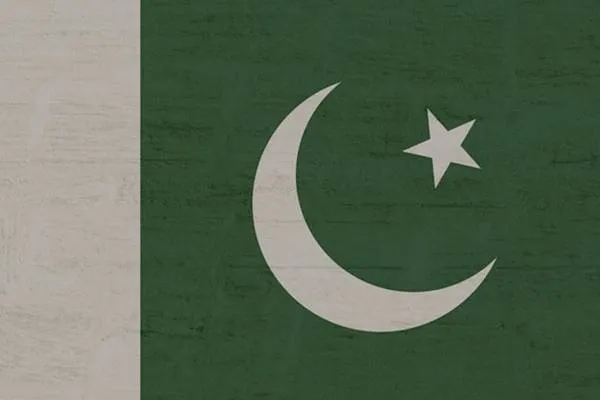
Pakistan’s Foreign Ministry issued a statement on the occasion of the August 21 International Day of Remembrance of and Tribute to the Victims of Terrorism, highlighting the heavy price the country has paid in the fight against terrorism.
The statement emphasized that the fight against terrorism should not be limited to a single day of remembrance, that the losses suffered by those who lost their lives and their families should be remembered, and that the struggle against the threat of terrorism should continue with determination.
Pakistan said it was observing the International Day of Remembrance of and Tribute to the Victims of Terrorism together with countries around the world, describing the day as an opportunity to remember those who lost their lives in the fight against terrorism, recall the price paid by victims’ families, and renew its resolve to combat terrorism.
The statement said Pakistan had suffered major losses in both human and economic terms in its fight against terrorism.
It said Pakistan had made “unprecedented sacrifices” in combating terrorism, not only for its own people but also for the security of the region and beyond.
The ministry reported that more than 90,000 Pakistanis had lost their lives in the fight against terrorism, while the country’s economic losses had exceeded $150 billion.
Pakistan’s Foreign Ministry said the threat of terrorism had evolved into a more complex structure over time.
The statement said terrorist organizations were increasingly using new technologies and cyberspace to carry out more sophisticated and deadly attacks, while claiming that Pakistan was also facing disinformation and misinformation campaigns, hydro-terrorism, and cross-border assassination campaigns.
The ministry said 2025 was one of the deadliest years Pakistan had faced in the past decade.
The statement claimed that the rise in violence was driven by attacks allegedly planned, financed, and directed from sanctuaries across the border. It further alleged that these attacks were carried out with the support of hostile elements in neighboring countries and indiscriminately targeted worshippers, children, women, and security personnel.
Pakistan said that despite all these challenges, its determination to combat terrorism in all its forms and manifestations remained unwavering.
Pakistan’s Foreign Ministry also expressed support in its statement for Kashmiris living in Jammu and Kashmir, which it described as being under India’s illegal occupation.
Pakistan claimed that Kashmiris continued to live under systematic state repression, including harsh laws, enforced disappearances, and arbitrary detentions.
The statement alleged that the practices against the Kashmiri people amounted to “a state-run campaign that meets every definition of terrorism.”
Pakistan said that despite decades of repression and practices it claims violate fundamental human rights, the people of Jammu and Kashmir had not abandoned their demand for the United Nations-recognized right to self-determination.
Pakistan’s statement also addressed developments in Palestine.
While noting that the ceasefire and diplomatic initiatives had created some space for the delivery of humanitarian aid, the statement said the Palestinian people, particularly children, women, and the elderly, continued to suffer because of serious human rights violations and the denial of their fundamental right to self-determination.
Pakistan said the global lessons that should be drawn from the past remained valid today, arguing that foreign occupation, unresolved conflicts, and the denial of the right to self-determination were exploited by extremists and terrorists.
The statement stressed that urgently addressing these issues was important for combating terrorism and extremism.
On the day commemorating victims of terrorism, Pakistan called on the international community to support terrorism victims and survivors around the world without discrimination.
The statement also called for stronger international cooperation and dialogue in the fight against terrorism. It said such cooperation should be objective, impartial, consistent, and equitable, and urged the international community to avoid double standards.
Pakistan’s Foreign Ministry emphasized that supporting victims of terrorism and strengthening international cooperation would contribute to building a more peaceful world for future generations.
British News Agency
 Facebook
 Tweeter
 Whatsapp